Modernization strategy and design ideation for handling and processing of tax documents for the Alcohol and Tobacco Tax and Trade Bureau (TTB)
2017-18, 1 Source supporting TTB
Project Summary | My Role | Challenges | Highlights
Project Summary
TracDoc, developed in 2010, aimed to streamline task management for the TTB National Revenue Center (NRC) Tax Services Branch (TSB) by digitizing work items. However, its reliance on Microsoft® Access® led to various limitations: inflexible interface, poor scalability, user restrictions, complex workflows, and high maintenance costs. Despite its role as a repository for TSB tasking and mail item images, TracDoc struggled to meet evolving operational needs and lacked integration capabilities with other systems. I was engaged to develop a comprehensive analysis and strategic plan for modernizing the TD system with a strong focus on user experience (UX) considerations.
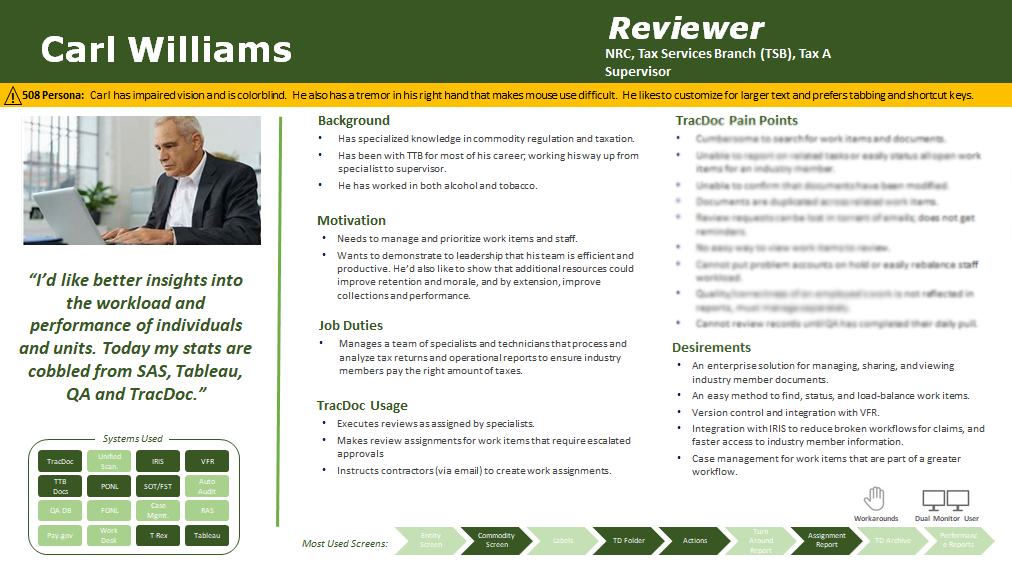
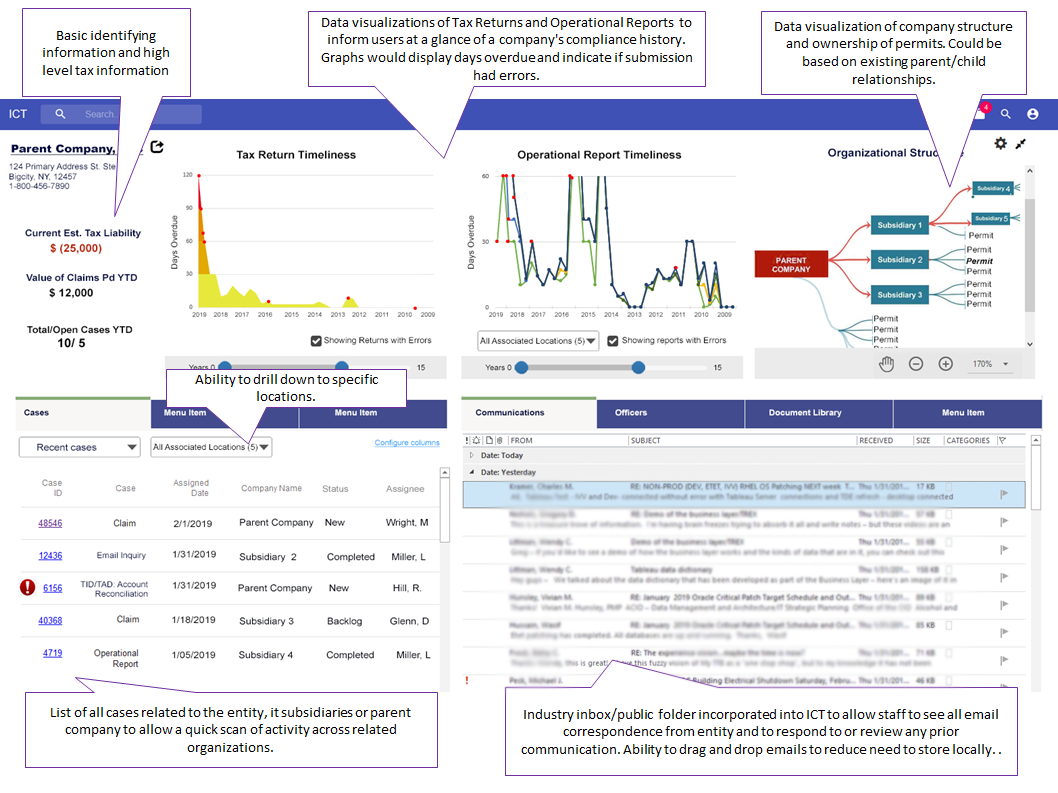
My work involved confirming the system’s value, understanding user needs through methodologies such as user research, TracDoc assessment, and task analysis. I also conducted qualitative analysis, developed personas, and validated user requirements to ensure alignment with UX principles. Throughout the process, I emphasized the importance of improving accessibility, navigation, and layout to enhance the overall user experience. Additionally, I proposed recommendations and benefits for each system module, considering human factors and usability aspects. This included figures visually representing key findings, designs, and system components, reinforcing the UX-centric approach adopted in the strategic plan. Overall, my efforts resulted in a comprehensive and actionable roadmap aimed at optimizing the TD system to meet user needs while enhancing usability and user satisfaction.
My Role
- Lead UX Researcher and Designer
- Presentation and education. Educated leadership, development team about User-centered design and incorporating UX into the Agile cadence
- Strategy: Elicited goals and expectations from TTB leadership, staff, synthesized user needs with leadership expectations and technical capabilities to create a comprehensive findings report and modernization strategy.
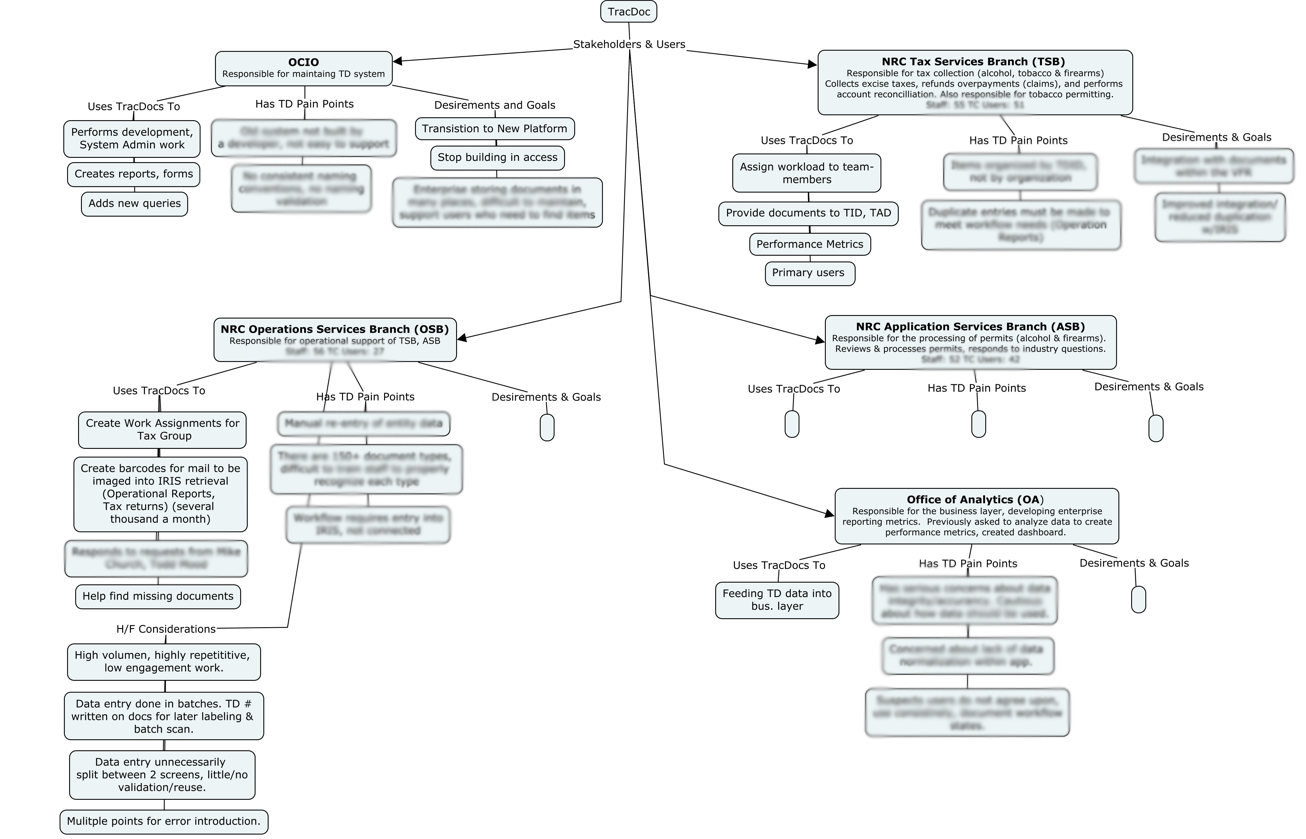
- User Research: System data was used to identify users, organizational affiliation, and system and job roles 36 interviews were conducted with TD users, stakeholders, and Subject Matter Experts (SMEs). Interview statements were coded for qualitative analysis.
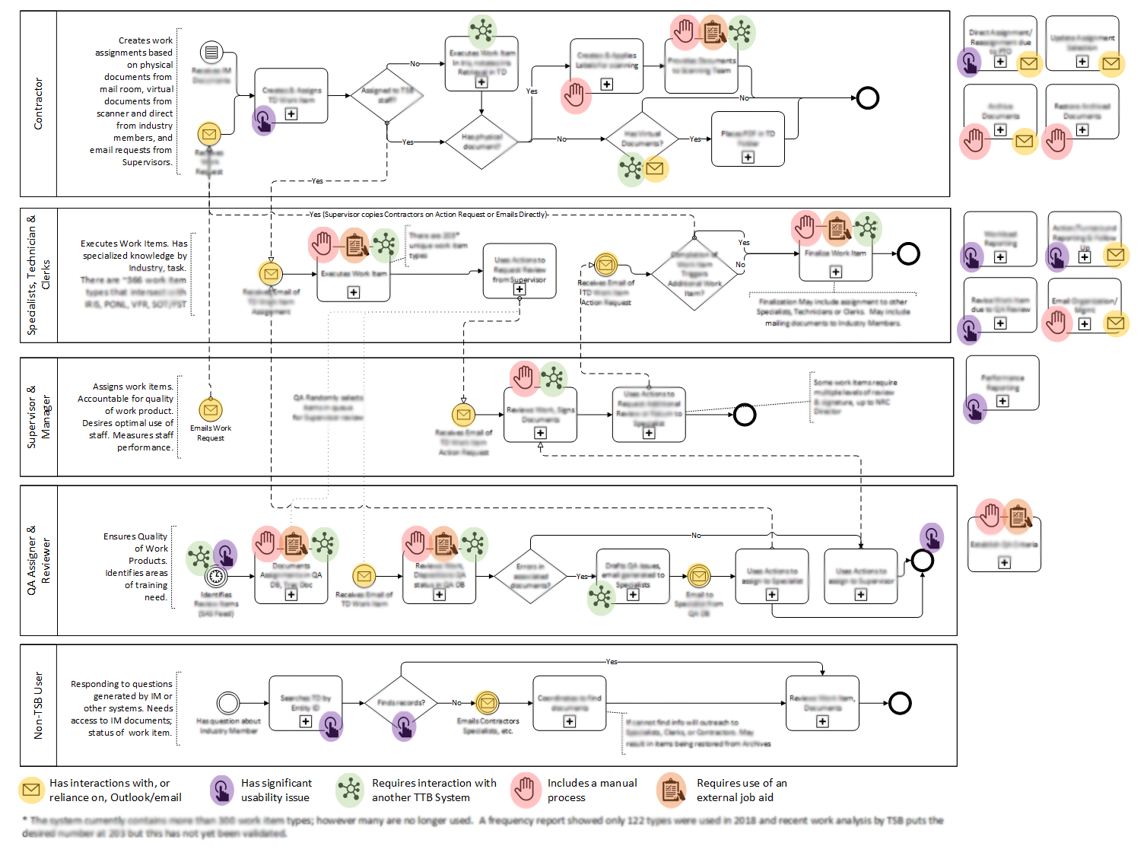
- Assessment: A review of the existing system that included an inventory of pages, analysis of existing reports, custom queries of the existing data, and heuristic review of the site pages. System workflows were modeled in Business Process Model Notation (BPMN) to validate our understanding of workflows and identify areas of possible improvement.
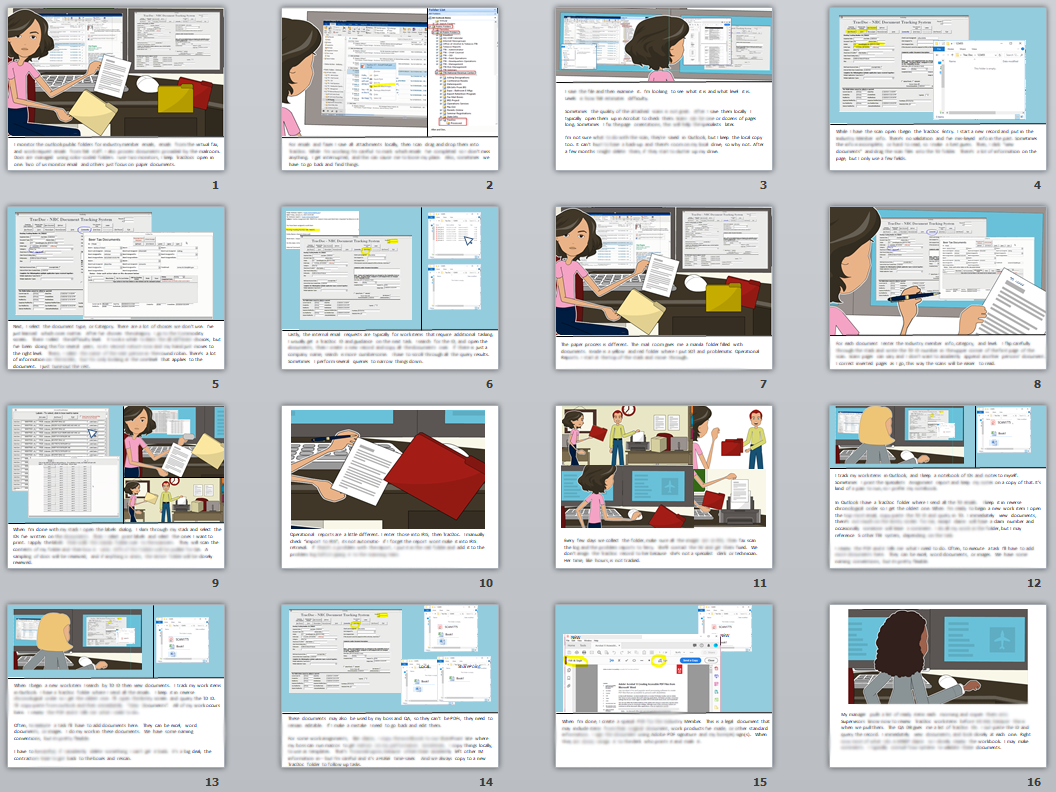
- Task Analysis: Detailed task analysis was performed on workflows related to work item entry, disposition, and Quality Assurance (QA) processes, in TD, and one TD work item (Operations Reports). For all other work items, documentation and interviewee comments were aggregated into a database to begin the capture and analysis process. TTB documentation related to Tax Services and the TD application were reviewed and combed for descriptive information, issues, and/or requirements. TTB.gov was also used as a source to understand Tax Services and their work items. Content from documents and TTB.gov coded for qualitative analysis.
- Code Development: Proto-typing of user interfaces and web-services was performed to validate expectations within OCIO and to prove that web services could be developed and used to obtain the desired experience, as well as test the external application development environment within Amazon.
- Technical Analysis: Development SMEs from IRIS, PONL, FONL and Unified Scanning, as well as SMEs establishing the new architecture and access control systems were consulted. Where possible documentation supporting their opinions was aggregated within Confluence, or cited in this document.
Highlights
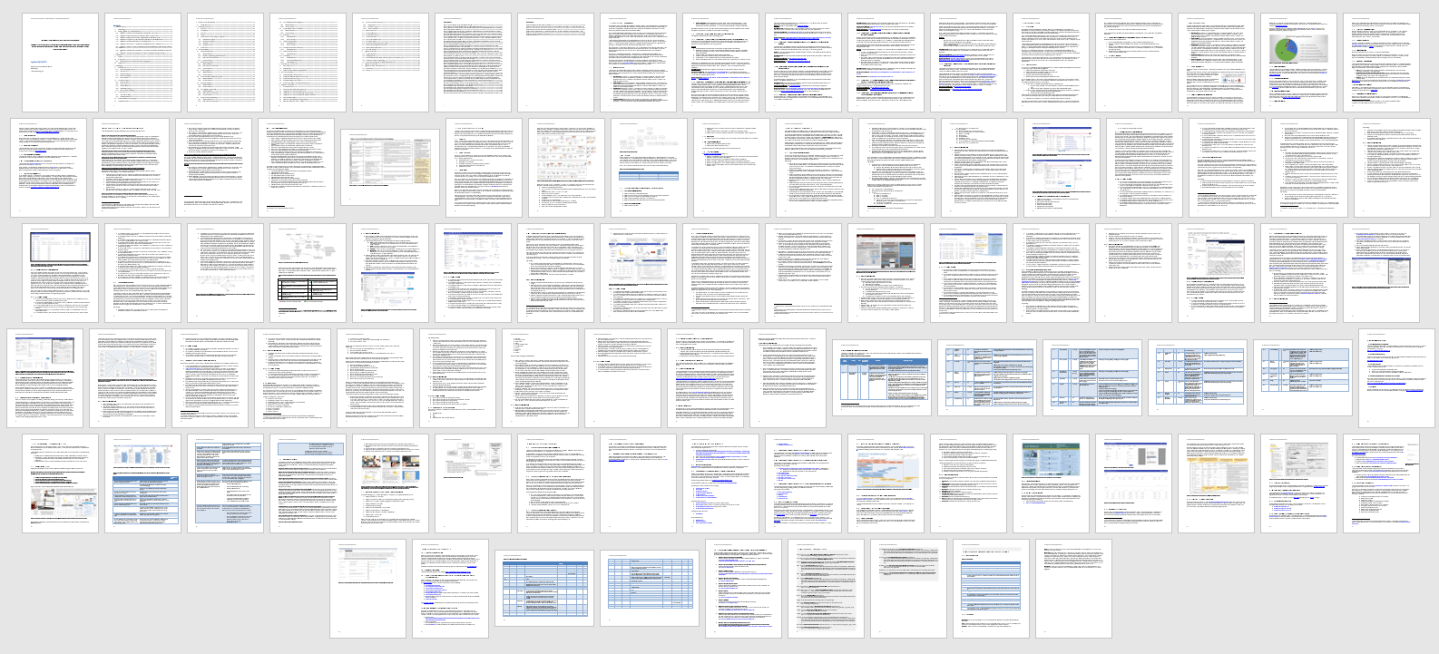
- All findings documented in a 93 page report for future development and budgeting

