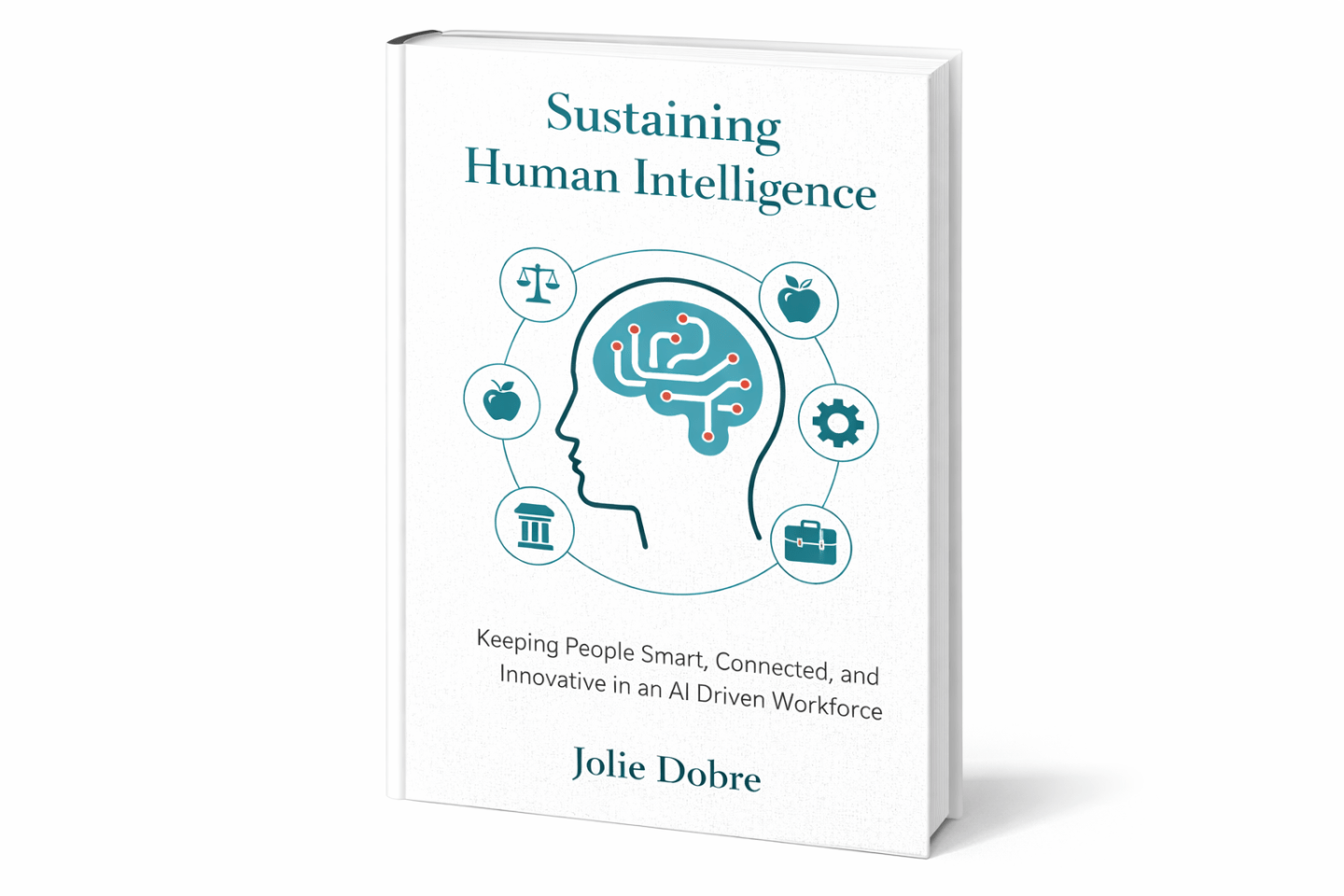
I am completing a book on how AI systems reshape human judgment, learning, and expertise—and how design choices determine whether those capacities are strengthened or quietly eroded.The book examines how automation, decision-support tools, and AI-enabled workflows change how people think, defer, trust, and learn over time. Rather than focusing on model capability, it focuses on impact: cognitive offloading, false certainty, skill decay, and the displacement of human judgment through design.
These effects are treated as design challenges, not abstract risks. Each chapter explores a specific failure mode and offers concrete, design-grounded strategies for building systems that preserve expertise, make uncertainty visible, and support sound decision-making—especially in high-consequence environments.
What the Book Is (and Is Not)
This book is not a technical guide to building AI models, and it is not a philosophical critique of technology. It is a design-focused examination of how AI interacts with human cognition in real workplaces—and how systems can be shaped to strengthen, rather than replace, human judgment.
Who It’s For
The book is written for designers, UX researchers, product leaders, analysts, and policymakers working with AI-enabled systems—particularly in healthcare, government, enterprise platforms, and other domains where errors carry real cost.
Status
The manuscript is in final editing, with the last chapter under revision. Many of the ideas in the book have been developed through published articles and ongoing writing, and are now consolidated into a cohesive, design-led framework.
It will be followed by Book 2: Sustaining Human Intelligence – Identity, Cognition, and Resilience in an AI-Mediated World
Book 2 expands the work of the first volume, examining how AI-mediated systems interact with identity stabilizers and what that means for critical thinking and cognitive resilience over time.

